A Nigerian Parent Reveals a Simple Step-by-Step Bedtime System That Ends Bedwetting in Older Children — Without Alarms, Medication, or Telling a Soul (Even When You Have Already Tried Everything and Nothing Held)
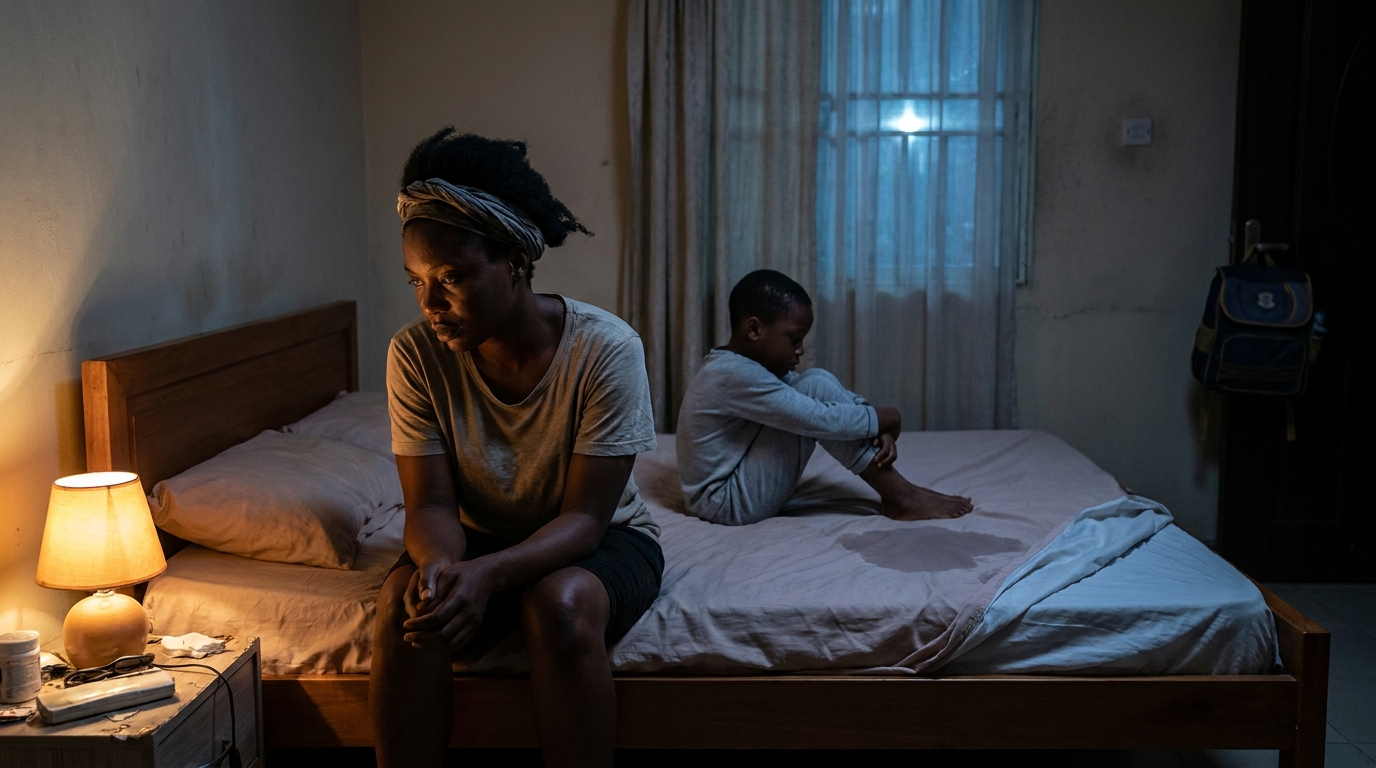
There is a moment every parent of an older child with bedwetting knows.
Not in the middle of the night. Though it starts there. It starts somewhere more specific than the wet sheets and the 2am strip of the bed.
It starts at a school notice.
Your child's class is going on an overnight trip. Two days, one night, supervised. The school sends home the permission slip.
Your child sees it before you do. And by the time you find it on the table, it is already folded over. Quietly.
You ask if they want to go.
They say no. Just like that. No reason given. No argument. Just no.
And you sit with the weight of that no, because you know exactly what it means.
Your child cannot sleep away from home because your child does not trust the morning.
You say nothing. You fold the permission slip. You throw it away.
And something heavy stays in the room after that.
Later that week, you begin to notice other things you had not let yourself name before.
The way your child changes the subject when classmates talk about sleepovers.
The extra set of clothes quietly packed into the school bag, just in case.
The look on your child's face when a younger sibling says something careless at the dinner table, and everyone pretends not to hear it.
You notice these things and you realise they have been there a long time. You had just been too tired from the nightly routine to see how deep the story was going.
The wet sheets are the smallest part of what bedwetting costs a family.
The part most parents never say out loud
When bedwetting continues past the age when it should have stopped, the shame is not just the child's. There is a quiet shame the parent carries too — the feeling that something is wrong, that they have missed something, that other families are managing something they are not. You Google it at night when the house is asleep and your child does not know you are searching. You have tried things and told no one. And in the morning you start again, the same way you started yesterday, with no clear sense of why this is still happening.
You are not failing your child. You just have not had the right information yet. That is what this page is for.
You have been managing this for longer than you want to admit.
The midnight sheet changes have become so routine that you do them half asleep. The waterproof mattress cover has been on the bed so long your child does not remember the bed without it. You have stopped mentioning it to family, because explaining it to people who do not understand is more exhausting than the problem itself.
And the hardest thing is that your child is not a baby. Your child is old enough to feel the difference between waking up dry and waking up wet. Old enough to carry the embarrassment. Old enough to have started pulling away from things other children do without thinking.
If you are tired of waiting for this to stop on its own, read every word on this page.
Because what Adaeze Nwosu is about to describe is a structured bedtime system that helped restore dry, confident nights for a child whose family had already tried everything the pharmacy and the internet had to offer.
It is not a medication. It is not a gadget. It is a system that works with the child's own body, applied consistently, with the right understanding of what is actually happening and what the body needs to change.
Nobody handed Adaeze this information. She had to find it.
Now it is here for you.
Who is Adaeze Nwosu
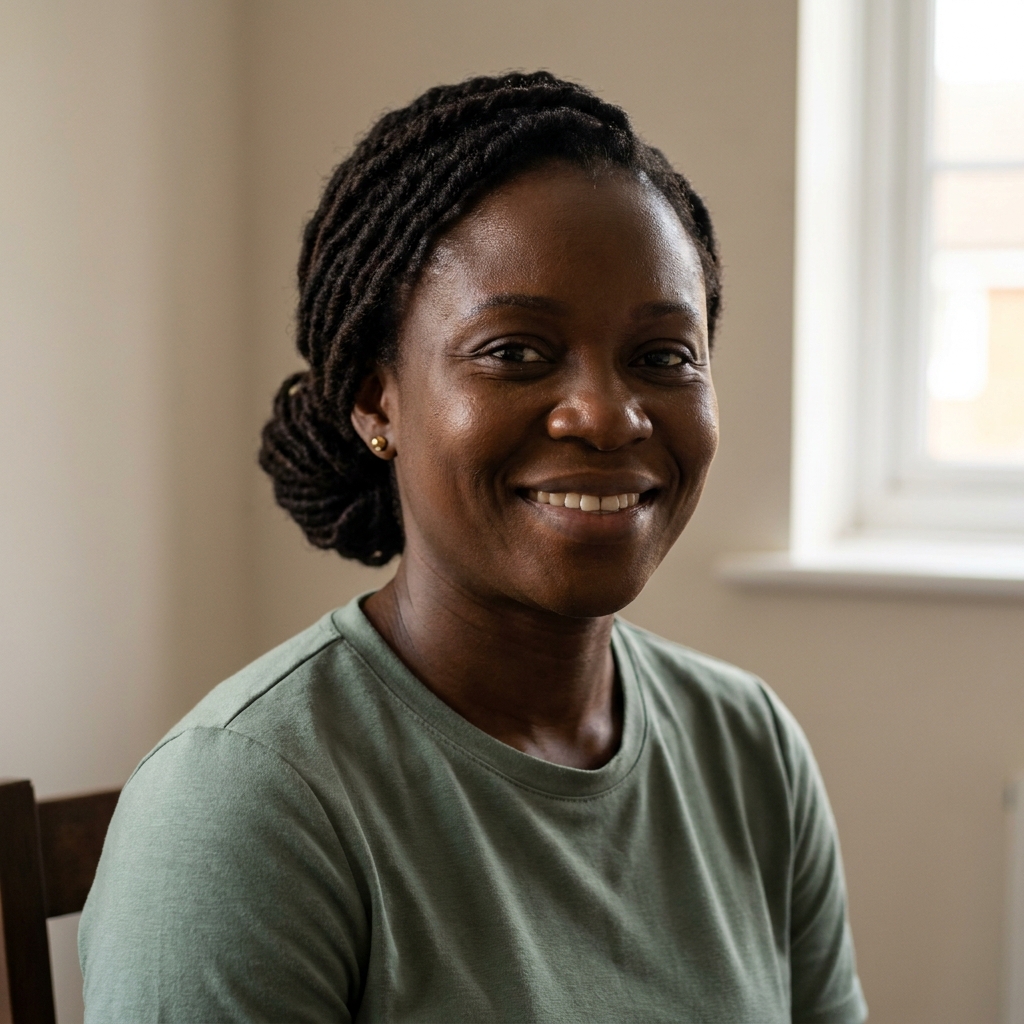
My name is Adaeze Nwosu.
I am NOT a paediatrician or a clinical sleep specialist.
I am NOT affiliated with any pharmaceutical company or selling any supplement.
I am a Nigerian mother who spent four years searching for something that worked — and eventually found it. And then organised everything I learned into a guide so no other parent has to search as long as I did.
I am sharing the method, not the full biography. My child's privacy matters more than my story. What happened to us is what brought this guide into existence. What is inside the guide is what will matter to you.
Everything We Tried Before We Found What Actually Worked
We started where most parents start. We assumed it would stop by itself.
Then we started trying things.
Over two years of the above, we spent between ₦45,000 and ₦70,000 on things that did not work, including the visits to two different clinics that resulted in the same instruction: "most children grow out of it, monitor and come back in six months."
We monitored. We came back. Nothing had grown out of anything.
I was not angry at the doctors. They were not wrong, exactly. They just did not have time to explain what was actually happening in the body and what a parent could actively do about it at home. That gap is what this guide fills.
The Day the Search Finally Ended
Adaeze found the turning point not in a clinic but in a quiet corner of a conversation with another parent, someone whose child had gone through the same thing and come out the other side.
She did not give me a product. She gave me an understanding.
"You've been treating the wet sheets. Nobody has explained to you why the body is producing them. Once you understand the reason, the steps to address it are not complicated. But you have to start with the reason."
She walked me through what was actually happening. The biology of nocturnal enuresis — which is the clinical name for bedwetting in older children — is not a mystery. It is a well-understood process involving the relationship between sleep depth, bladder capacity, and a hormone called ADH that regulates how much urine the kidneys produce at night.
The body is supposed to produce more ADH during sleep, signalling the kidneys to slow urine production. In children with bedwetting, this signal either misfires or the bladder does not hold enough to last the night. Neither of these is the child's fault. And both of them can be actively supported toward normal function with the right consistent routine.
She had done the research. She had found a protocol. She had followed it with her child for six weeks.
"Week one, nothing. Week two, something felt different. By week four, the sheets were dry four nights out of seven. By week six, we had stopped counting the wet nights and started counting the dry ones."
Adaeze wrote down everything she was told. She went home and started that same week.
What Happened When Adaeze Followed the Protocol
Days 1 to 6: Nothing visible.
She had expected nothing. The previous two years had adjusted her expectations thoroughly.
Week 2: A different quality of sleep.
Not dry nights yet. But something in how the child was sleeping had changed. More settled. Less restless in the early hours when the accidents had always happened.
Week 3: The first fully dry night.
Adaeze did not say anything in the morning. She did not want to create pressure. But she noticed. And the child noticed too, because there was something different in the face at breakfast. Quieter. But a good quiet.
By week five, dry nights outnumbered wet ones. By week seven, the waterproof cover came off the bed. Not because I removed it. Because my child asked me to.
The permission slip came home again at the end of that term. Another school trip.
The child picked it up off the table. Looked at it for a moment. And brought it to Adaeze to sign.
No explanation. Just handed it over.
She signed it. Said nothing. But she kept that permission slip for a long time after.
Why Adaeze Is Sharing This
You found this page because you are looking for something that works. You have probably already tried some of the same things Adaeze tried. You are tired of being told to wait.
The protocol that changed things for her family is not complicated once it is explained clearly. What takes time is finding it, understanding it, and organising it into something a busy parent can follow at home without a medical degree.
That is what Adaeze spent months doing. And that is what this guide contains.
Every step. Every reason for every step. Everything you need to follow it from night one.
Introducing: The Dry-Night Recovery System
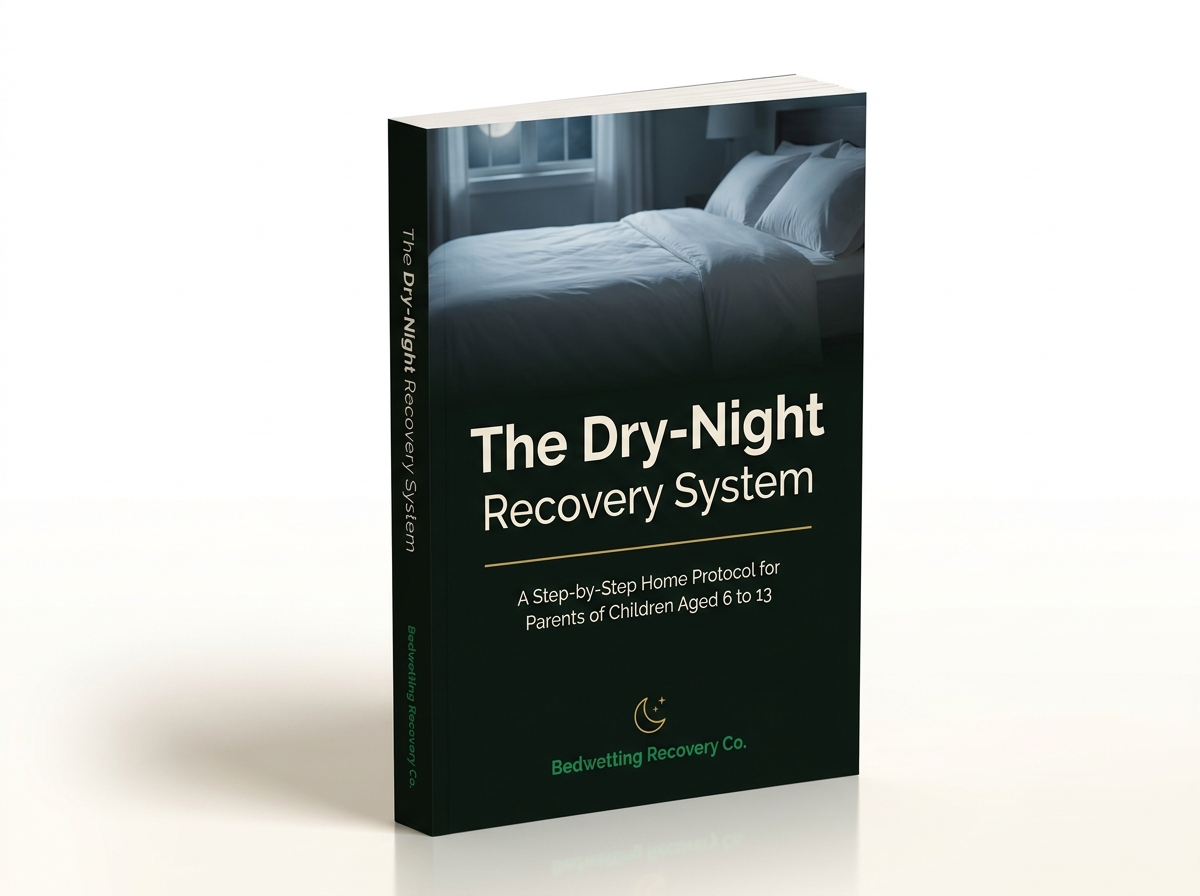
The Dry-Night Recovery System
A step-by-step home protocol for parents of children aged 6 to 13 who are still wetting the bed — addressing the actual cause, not just the night-time symptom.
Inside this guide, you will find:
✔ The biology of bedwetting in plain language — what is actually happening in your child's body and why all the things you have already tried have not held (Page 4)
✔ The Dry-Night Protocol in full — the complete structured bedtime routine, step by step, with the reason behind each step written clearly enough for any parent to follow without guessing (Page 9)
✔ The fluid schedule that actually helps — not restricting water, but timing and distributing fluids in the way that supports bladder capacity building without adding discomfort (Page 14)
✔ The three signs the body is beginning to respond — what to watch for in the first two weeks that tells you the protocol is working before the dry nights begin (Page 18)
✔ How to talk to your child about this process — the exact framing that reduces shame, builds cooperation, and protects your child's confidence throughout the recovery period (Page 21)
✔ What to do when a wet night happens mid-protocol — how to handle it without breaking progress or denting morale on either side (Page 24)
✔ The maintenance phase — what to do after the dry nights become consistent, so the recovery holds across months and not just weeks (Page 27)
A note of honesty
This is a structured home routine based on well-documented approaches to supporting bladder control and sleep-pattern development in older children. Many families find it helps restore dry nights within four to six weeks of consistent use. It is not a drug and it does not guarantee outcomes.
Bedwetting in older children can have a range of causes — some respond well to behavioural and routine-based approaches, others have a medical component that requires professional assessment. If your child's bedwetting is accompanied by pain, unusual thirst, or other symptoms, please see a doctor. This guide supports the recovery process — it does not replace medical advice when that advice is genuinely needed.
Two Additional Guides Are Included at No Extra Cost
The core system addresses the bedtime routine. A full recovery also means addressing what happens during the day. Two supporting guides are included alongside the main protocol.

- The simple daytime bathroom habits that directly support overnight bladder capacity — takes less than ten minutes a day and requires no special equipment
- How to build bladder capacity gradually through a scheduled approach your child can follow without embarrassment at school
- The foods and drinks that quietly work against bladder control — including two common Nigerian household items most families never consider
- A daily tracking sheet that turns the recovery into something the child can participate in with pride rather than shame
- How to maintain daytime gains so the overnight recovery has the foundation it needs to hold
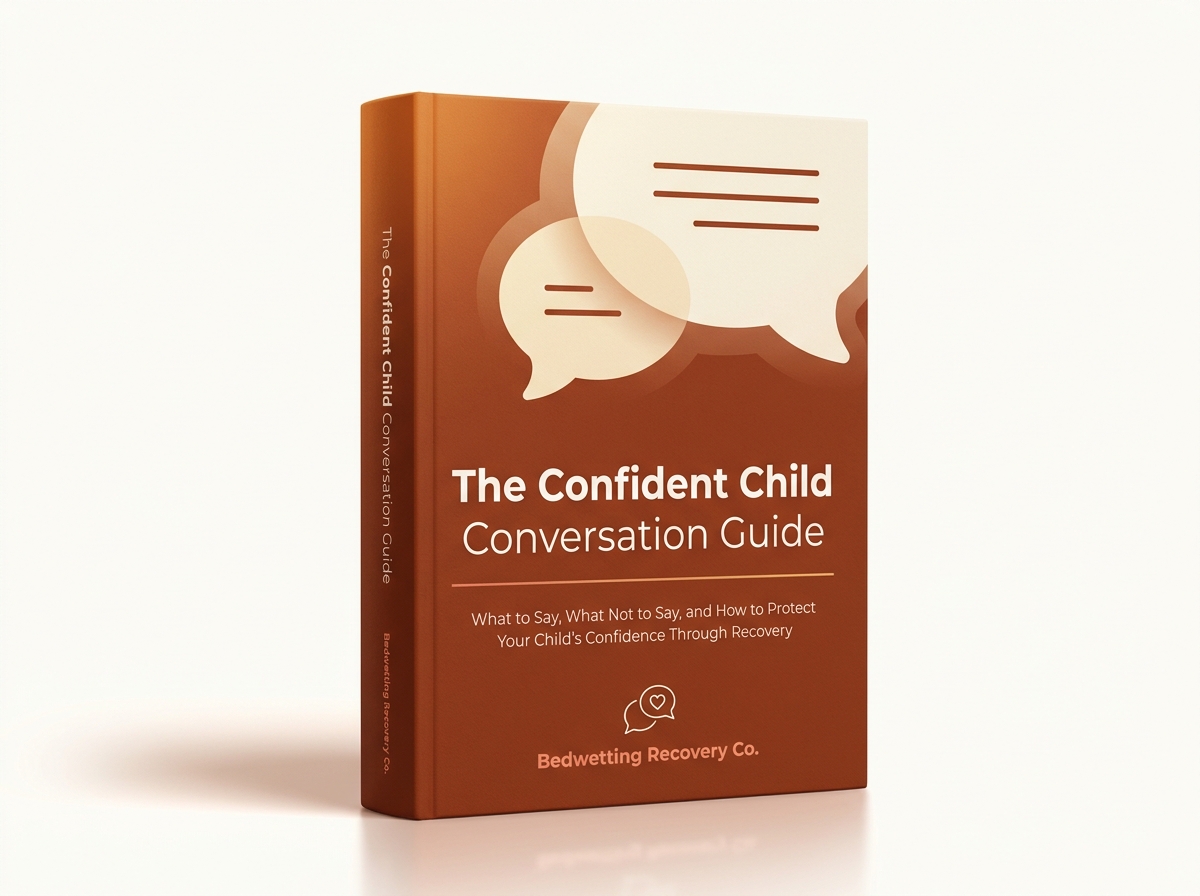
- Exact words and phrases to use when talking to your child about bedwetting — tested framing that reduces shame and opens cooperation
- How to handle siblings, family members, and school situations without exposing your child or making the problem bigger than it needs to be
- The conversations to have before the first sleepover, school trip, or overnight stay — so your child goes prepared rather than anxious
- What not to say — the well-meaning phrases that quietly damage confidence even when the parent means well
- How to celebrate dry nights without creating pressure around the wet ones
Both bonus guides are delivered instantly alongside the main system. No separate payment. No extra steps.
Parents Who Followed the System
What This Costs
Most parents dealing with bedwetting in an older child have already spent money on things that did not work. The alarm. The supplements. The clinic visits that ended with "wait and monitor."
The average Nigerian family spends between ₦30,000 and ₦80,000 over two years managing around this problem rather than addressing it. Clinic visits, herbal mixtures, alarms, and waterproof bedding that gets replaced when it wears through.
None of that money went toward the cause. It went toward the symptom.
This is a one-time investment in the protocol that addresses what all of those things were never designed to reach.
A fair price for what is inside this package would be ₦19,800. That is less than one visit to a private paediatric clinic and a fraction of what most families have already spent on things that did not last.
But this is a new release, and the launch price is different from the full price. Here is what today looks like:
Everything included in one payment:
All 3 guides • instant digital download • lifetime access
Secure payment • Instant access • 60-day money-back guarantee
₦9,800 is where this starts. Once the launch window closes, the price returns to ₦19,800 and both bonus guides return to their individual prices. If this page is still showing ₦9,800, the window is open.
You are not the only parent reading this page right now.
60-Day Full Refund Guarantee
Step 1: Download all three guides today.
Step 2: Follow the Dry-Night Protocol consistently for 21 to 30 days as instructed.
Step 3: Track what changes — the quality of sleep, the frequency of wet nights, how your child carries themselves in the morning.
If you do not see a meaningful improvement in your child's dry nights within 60 days of following the system, send a message and receive your full ₦9,800 back. No interrogation. No back and forth.
You have nothing to lose here except the pattern you are tired of living in.
Two Directions From Here
Continue changing the sheets at 2am and saying nothing in the morning.
Continue watching your child fold the permission slip and leave it on the table.
Continue telling family it is being managed while knowing it is not moving.
Continue spending money on things that address the surface and leave the cause exactly where it was.
Continue watching your child pull away from the things other children do without a second thought.
The body does not fix this on its own when the cause is not being addressed. Every year that passes is another year of the same pattern.
Picture four weeks from tonight...
Dry sheets two mornings in a row.
A different quality in your child's face at breakfast. Quieter. But a good quiet.
The school trip permission slip picked up from the table and handed to you.
Your child asking for the waterproof cover to come off the bed.
Sleeping through the night — both of you — for the first time in years.
That is what this system is for. But only if you start tonight.
What Parents Ask Before They Start
Before You Leave This Page
I want you to picture something specific.
It is four weeks from tonight.
You wake up at the usual hour, the one your body has been conditioned to by years of this routine. But you do not get up. Because there is nothing to get up for. The house is quiet. Your child is sleeping.
In the morning, you walk past the bedroom. The bed is dry.
Not for the first time. For the fourth time this week.
Your child says nothing about it at breakfast. Children do not narrate their own recovery. They just live it.
But you see something in the way they move through the morning. Less guarded. More settled. The way a child looks when something that was weighing on them quietly, invisibly, has been put down.
Hold that morning.
Not because of what the dry sheets mean for the laundry or the sleep. Because of what they mean for your child — who has been carrying this quietly, for longer than a child should carry anything.
The families who found their way out of this pattern all did one thing differently from the families who are still waiting.
They stopped waiting.
The answer to this exists.
It is here now. The rest is yours.
With warmth,
Adaeze Nwosu
Bedwetting Recovery Co. · Quiet, confident nights for your child
P.S. — The 60-day guarantee means there is no real risk here. Either the system helps restore dry nights and your child's confidence, or your ₦9,800 comes back. The only way to lose is to close this page and stay in the same pattern.
P.P.S. — ₦9,800 is the launch price. Once the window closes, the price returns to ₦19,800 and both bonus guides return to their individual prices. If the number on this page is still ₦9,800, the window is open right now.
P.P.P.S. — Every night the protocol does not start is another night of the same routine. The sheets. The 2am change. The morning silence. Your child already knows how to carry this. They have been doing it for a long time. You are the one who can end it. The system is here now.